Summary
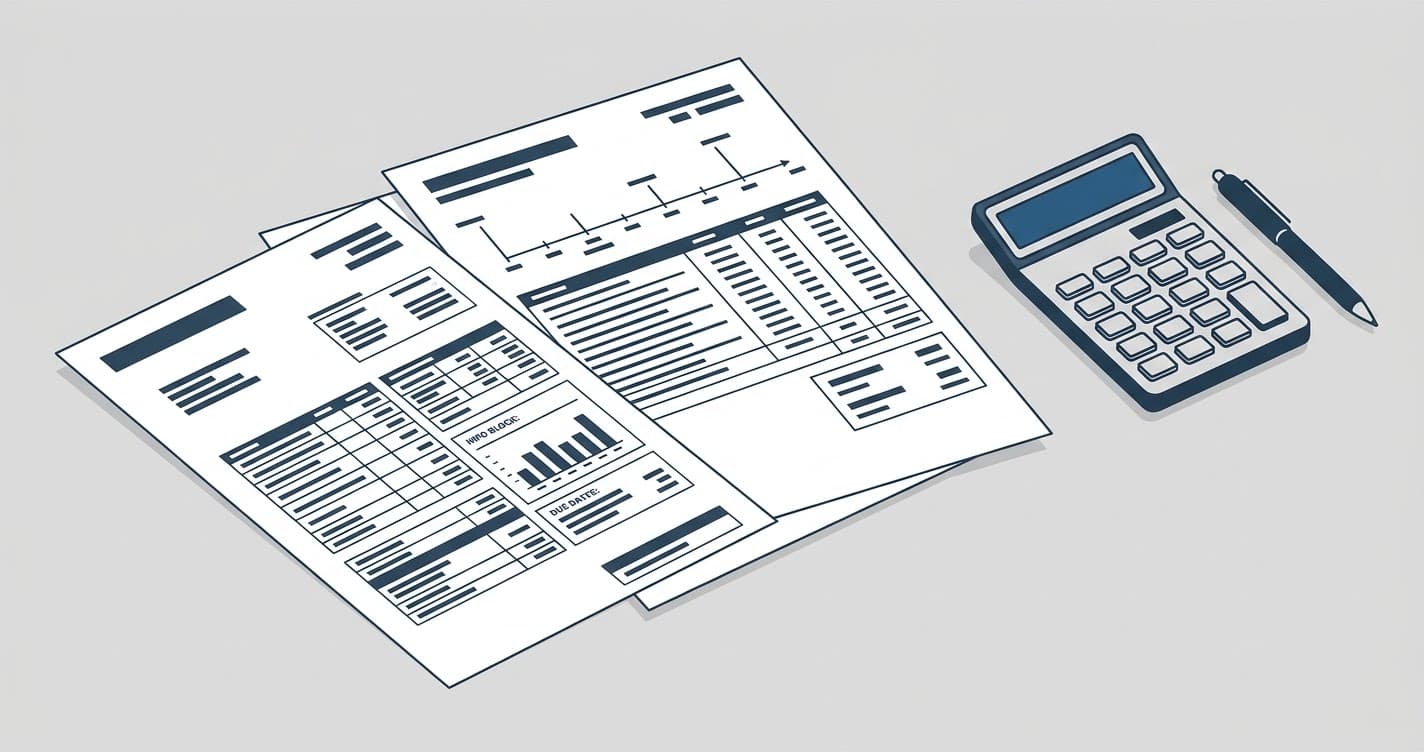
- One Heritage is a serviced apartment on commercial title. That land-use class, not the purchase price, sets three of the bills you pay every year: electricity, assessment tax and parcel rent.
- Electricity is about 14% more per unit of usage than a home on domestic supply — not double. The energy charge is identical at 27.03 sen/kWh; the gap sits in the capacity, network and retail charges, and in the waivers a domestic household gets that a commercial account never does.
- Assessment tax (cukai taksiran) runs at 0.22% of improved value in MBJB's serviced-apartment band — about 2.75 times the 0.08% residential rate, and a shade under the 0.23% pure-commercial rate.
- Parcel rent (cukai petak) adds roughly RM50 to RM200 a year, billed straight to you by the State Land Office and due by 31 May.
- Maintenance and sinking fund are not filed yet — the brochure leaves the figure blank, so treat it as unknown rather than guessed.
- What the higher bills buy you is letting flexibility a residential-title unit does not carry.
Why land title decides your bills
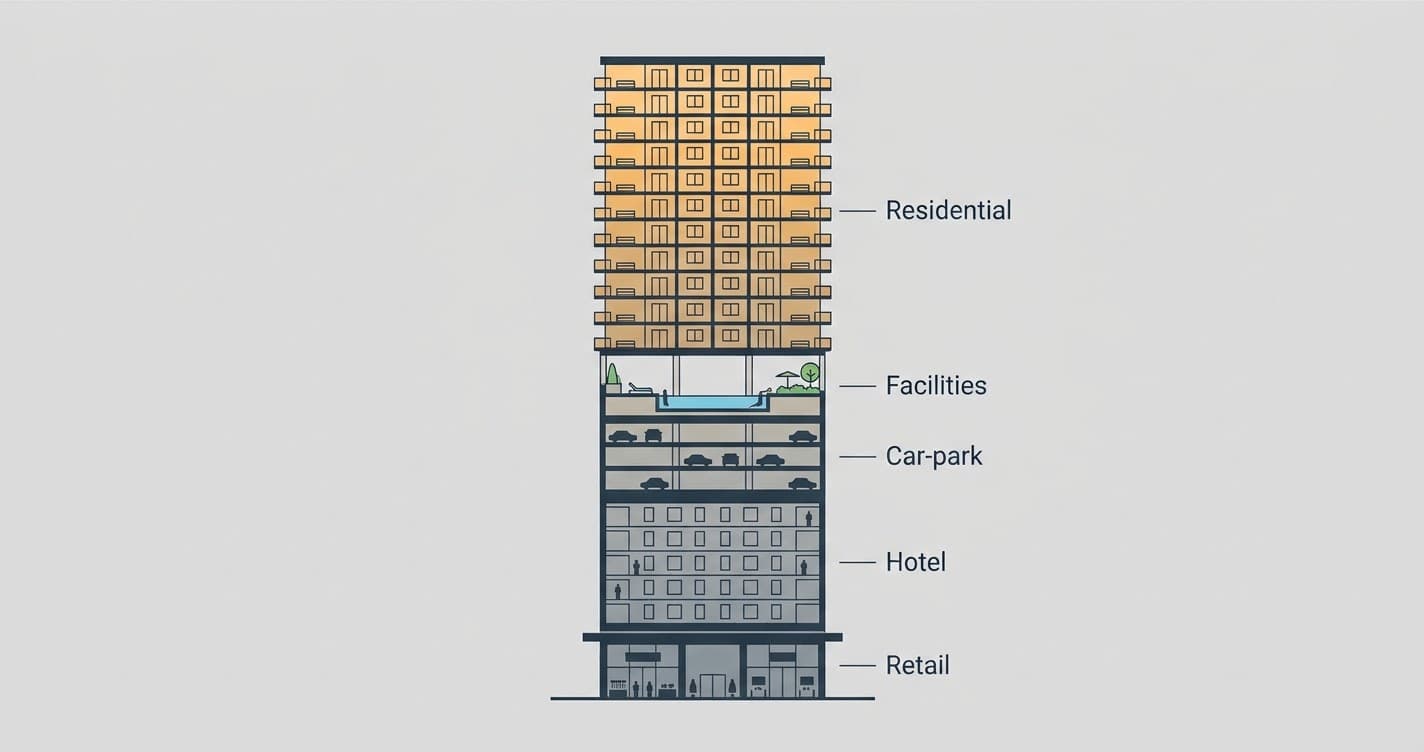
A serviced apartment is lived in like a home, but its land is held on commercial title. That single classification, fixed long before you pick a unit, drives the recurring bills more than the price on the SPA does. Two things are worth keeping apart here: One Heritage is freehold, which is about how long you own it, while commercial title is about how the land is classed. The utility companies and the council read off the class, and it has nothing to do with whether the tenure is freehold or leasehold.
Three bills follow from the commercial class, and the honest version of each is below. None of them is the headline objection buyers arrive with, and one of them is far smaller than the rumour.
Electricity: about 14% more, and not where buyers expect
The claim you will hear is that commercial electricity costs roughly double. It does not. Under the tariff that took effect on 1 July 2025 — the first rewrite of the schedule since 2014 — the energy charge is the same for a home and a commercial account: 27.03 sen/kWh. The difference sits in the other components:
- Energy charge — 27.03 sen/kWh on both. No difference.
- Capacity charge — 8.83 sen/kWh commercial, against 4.55 domestic.
- Network charge — 14.82 sen/kWh commercial, against 12.85 domestic.
- Retail charge — RM20 a month commercial, against RM10 domestic.
Add the per-kWh components and the variable charge is 50.68 sen commercial against 44.43 domestic — about 14% more, not a doubling. The real gap is a little wider than that, for a reason that has nothing to do with the tariff table: a domestic household below a monthly usage level has the fuel surcharge (AFA) and the retail charge waived outright, and a commercial account never is. The AFA is reset every month, so there is no fixed figure to quote — but in most months it pushes the commercial account further ahead of a protected home than the 14% on the standing charges alone.
A precise monthly ringgit figure is not something anyone can give you honestly, because it turns on how much you actually use and on that month's surcharge. What holds is the shape: the energy you burn costs the same on both, the commercial account pays more on the charges around it, and it gets none of the domestic waivers.
Assessment tax: the serviced-apartment band
Assessment tax (cukai taksiran) is the council's annual charge, and Johor sets it in a way most of Malaysia does not. MBJB rates on the property's improved (market) value, not the annual rental value most Malaysian councils use — so the rule of thumb for a condo elsewhere does not carry over. The rate then depends on how the holding is classed:
- Residential — 0.08% of improved value.
- Serviced apartment (Pangsapuri Perkhidmatan) — 0.22%.
- Commercial — 0.23%.
One Heritage sits in the serviced-apartment band at 0.22%. That is about 2.75 times the residential rate — the honest version of “a serviced apartment costs more to hold” — and a shade below the pure-commercial rate, so the band is slightly kinder than the title class alone would suggest. On the SPA price as a rough proxy, that works out to about RM1,300 a year on the entry unit and about RM2,900 a year on the 840 sq ft three-bedroom. Treat those as estimates, not quotes: MBJB assesses the improved value at a level approved by the State Government, which is not necessarily what you paid. The bill comes twice a year, due at the end of February and the end of August.
Parcel rent: the small bill most people miss
A strata unit pays parcel rent (cukai petak), not the quit rent (cukai tanah) a landed owner pays on their own title. It is billed direct to you by the State Land Office (Pejabat Tanah), not collected through the building's management, and it is set by the size of your parcel rather than its value. For a strata parcel it runs roughly RM50 to RM200 a year, due by 31 May, with a late penalty in Johor after that date. It is the second half of your statutory bill, and the one buyers forget because nobody raises it at the showroom.
Maintenance and sinking fund: not filed yet
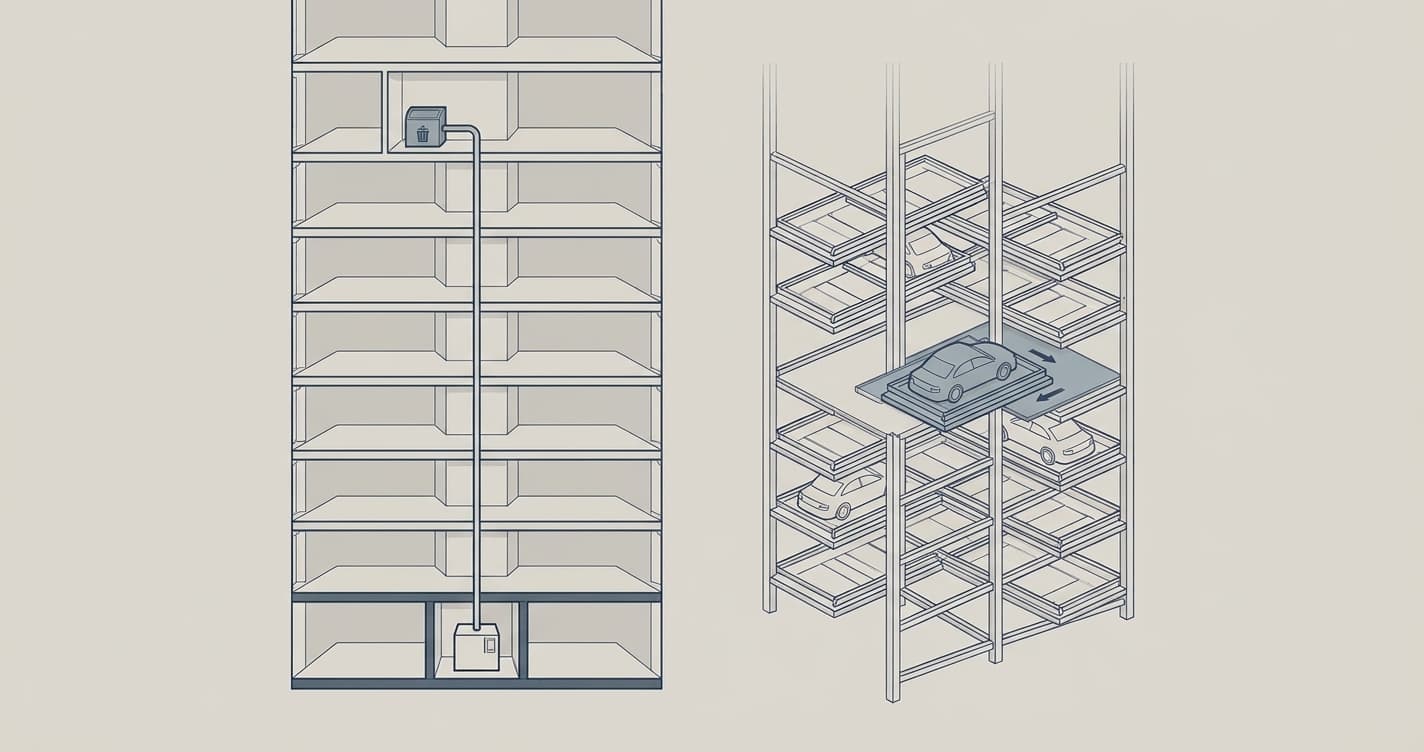
The third recurring cost is the monthly maintenance charge, together with the sinking fund that pays for long-term repairs, and it is not filed for this project. The brochure's Maintenance Fees field is blank, so any monthly figure you are quoted now is an estimate, not a committed rate. It is a real cost and it will land in the sale contract or shortly after; the honest position today is that the number is not yet set. A tower with a pool, two gyms, an automated waste system and mechanical parking has real plant to run, so ask for the figure in writing rather than working off a guess.
What commercial title gives back
The same title class that raises these bills is also what lets you let the unit out by the night. In Johor, short-stay letting is confined to commercial-title property — a residential-title condo cannot do it legally. The cost and the flexibility are the same fact seen from two sides: a residential owner who wanted the letting right would have to convert to commercial title and take on these exact holding costs, which is why almost nobody does. The higher bills are the price of a use the cheaper title class is shut out of.
Adding it up: the yearly picture beyond the loan
Set the loan aside and the fixed statutory bill is smaller than most buyers fear. On the entry unit, assessment of about RM1,300 plus parcel rent of RM50 to RM200 puts the yearly council-and-land bill at roughly RM1,400 to RM1,500; on the 840 sq ft three-bedroom it is around RM3,000. On top of that sit maintenance and the sinking fund — not yet filed — and electricity at the commercial tariff, about 14% more per unit of usage than a home. Everything here is an estimate built on filed rates and the SPA price; your real bill turns on the assessed value, your own usage, and the maintenance rate once it is set.
Add your loan to these figures on the installment calculator.